Salazar's Altura Project won this year’s Earth Advantage Innovative Design Award of 2025!
Last month, Altura was honored with the 2025 Earth Advantage Innovative Design Award. Jake Lewis, Project Architect for Altura, shares more below on the sustainable design approaches that informed this development:
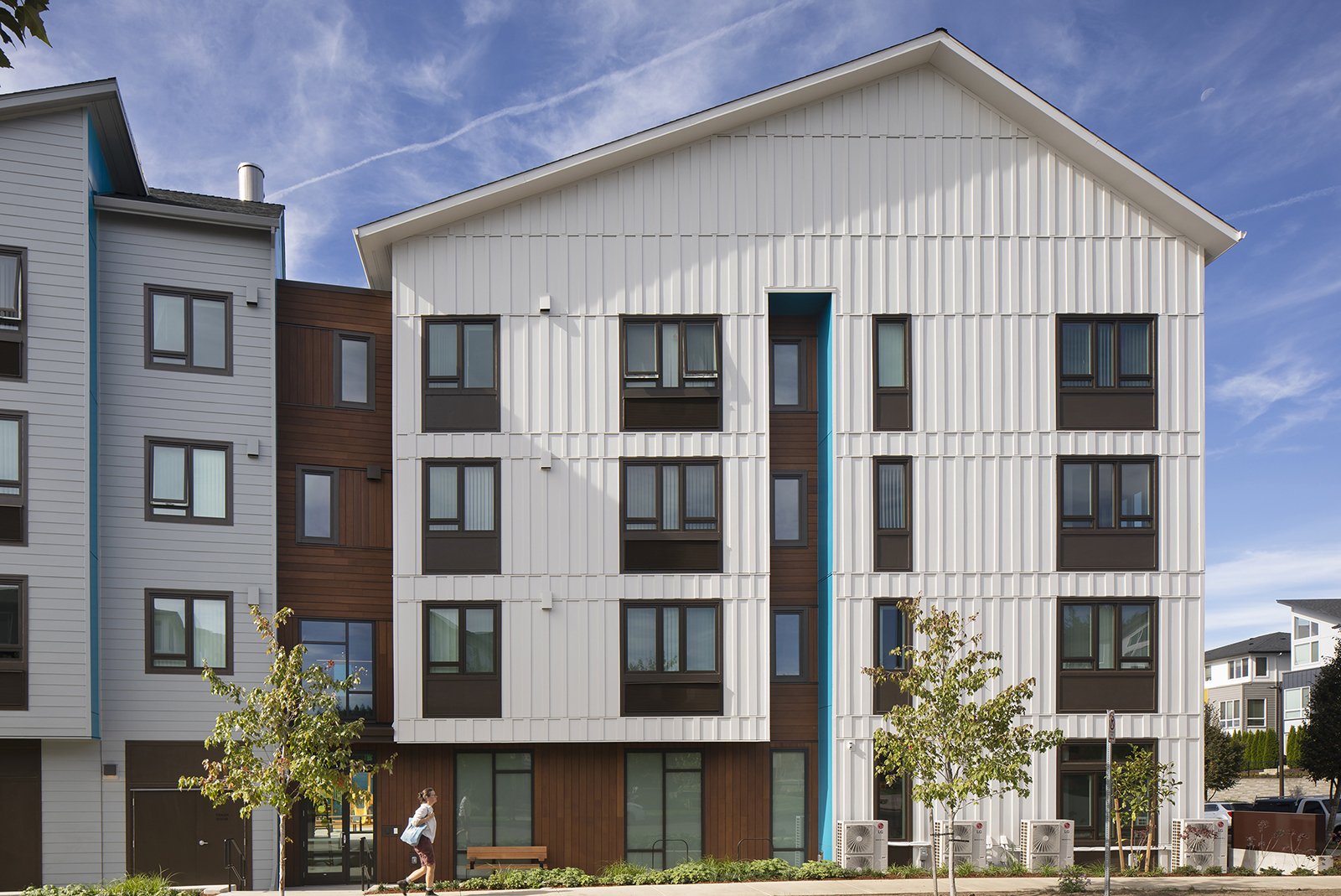
Sustainability was a priority for the project from the outset. Earth Advantage was brought into the project early, and goals were set as a team. Our initial target was Gold certification, but with Platinum as an achievable stretch goal, as we were only a few points shy based on our early calculations. The team stayed in communication and kept the goals in sight throughout construction. This allowed us to turn enough ‘maybe’ points into actual points and achieve Platinum certification.
We conducted early design studies to help place and orient the building so the roofs could maximize solar energy potential. These were done using Cove.tool to conceptualize different options. Altura lacked the funding to install solar during construction, but is solar-ready. The design team produced a high-level energy model very early in the design process to identify areas of opportunity in energy savings, using Cove.tool. Altura has a robust thermal envelope including high R-value exterior walls (R-26) and roof (R-49), fully insulated slabs on grade (R-15), continuous air barrier installation, high-performance windows (U-0.27, SHGC-0.27), and a balanced mechanical system. The fully insulated slab-on-grade was identified in the early energy model as an opportunity that proved to be a significant operational energy saver. The team also worked with an envelope consultant to ensure the envelope was resilient and would protect the building's lifespan and comfort level for as long as possible.
In addition to the final whole-building operational energy model produced by Earth Advantage, the design team used Tally software to develop a whole-building embodied energy model, identifying areas where global warming potential could be reduced. Part of this process was determining which exterior and corridor wall assemblies had the lowest footprint while remaining within budget, while maintaining a strong thermal envelope and acoustic performance. 2x8 exterior walls with internal blown cellulose insulation performed better than 2x6 with continuous exterior insulation and internal fiberglass insulation; both utilizing semi-advanced framing at 24” o.c. Since the 2x8 wall assembly penciled less due to there being less labor involved for installation, it was a win-win and was ultimately used. Similarly, staggered stud corridor walls were better performing than those with resilient channels. For Salazar, this design strategy informed baseline wall assemblies and methods for evaluating new ones going forward.

Altura is a successful development that has performed very well from both a resident and sustainability perspective, especially given the project's very limited budget. Salazar’s studies of the project at early stages using Cove.tool and Tally proved to be fruitful not just for Altura but for all our projects going forward. By establishing methods for evaluating operational and embodied energy consumption at early stages, we can implement large-scale design changes that significantly impact final outcomes.
Even with limited budget constraints, our approach demonstrates that when sustainability goals are set early and prioritized in all decisions, a high level of sustainability can be achieved in any project. We’re grateful to be recognized with the Earth Advantage Platinum certification and an Innovative Design award, especially as it demonstrates that the benefits of sustainable design can be enjoyed by people of all income levels.
Congrats to the whole team and this group effort and award!
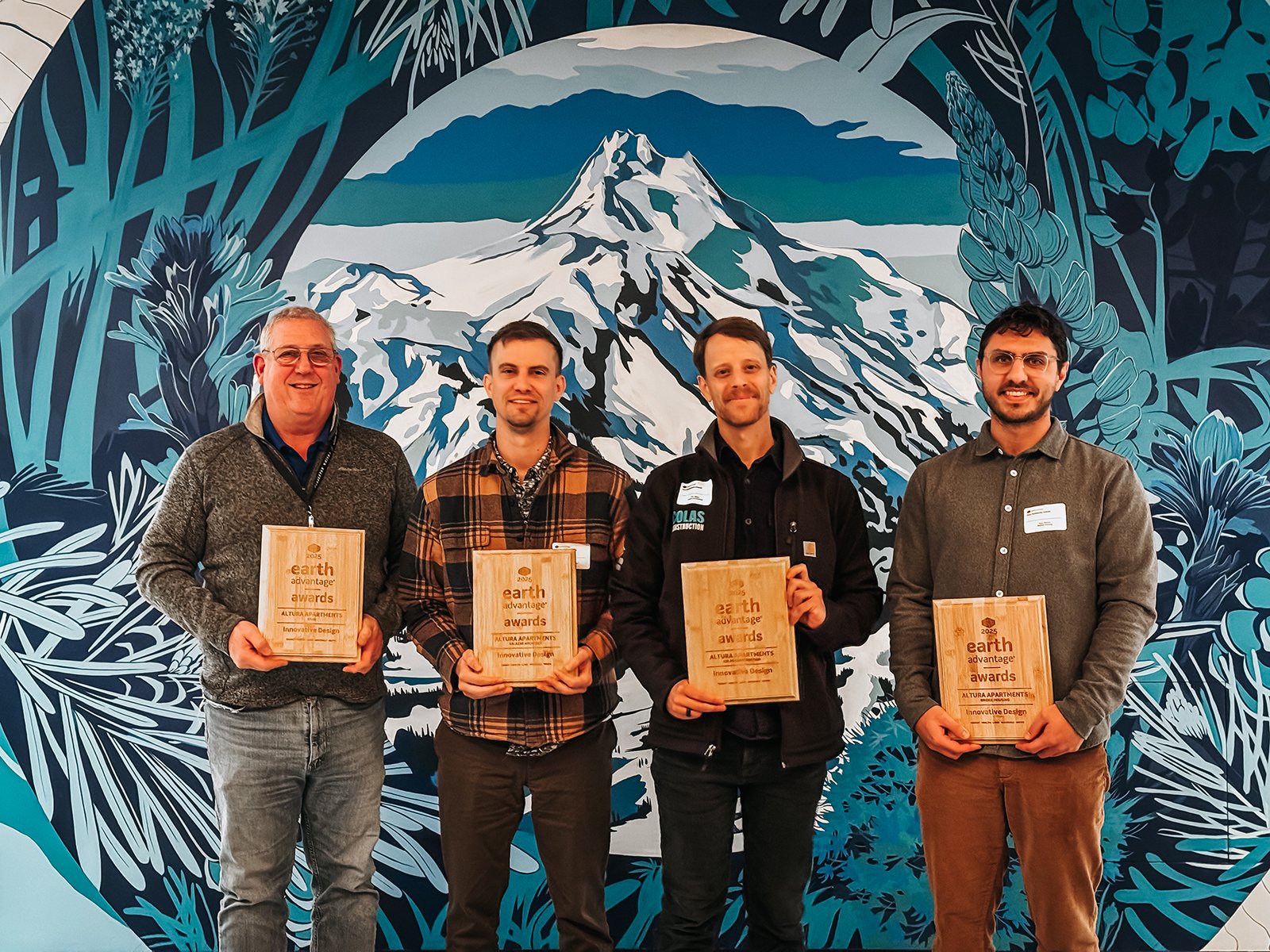
Image credit: Earth Advantage